What Happened
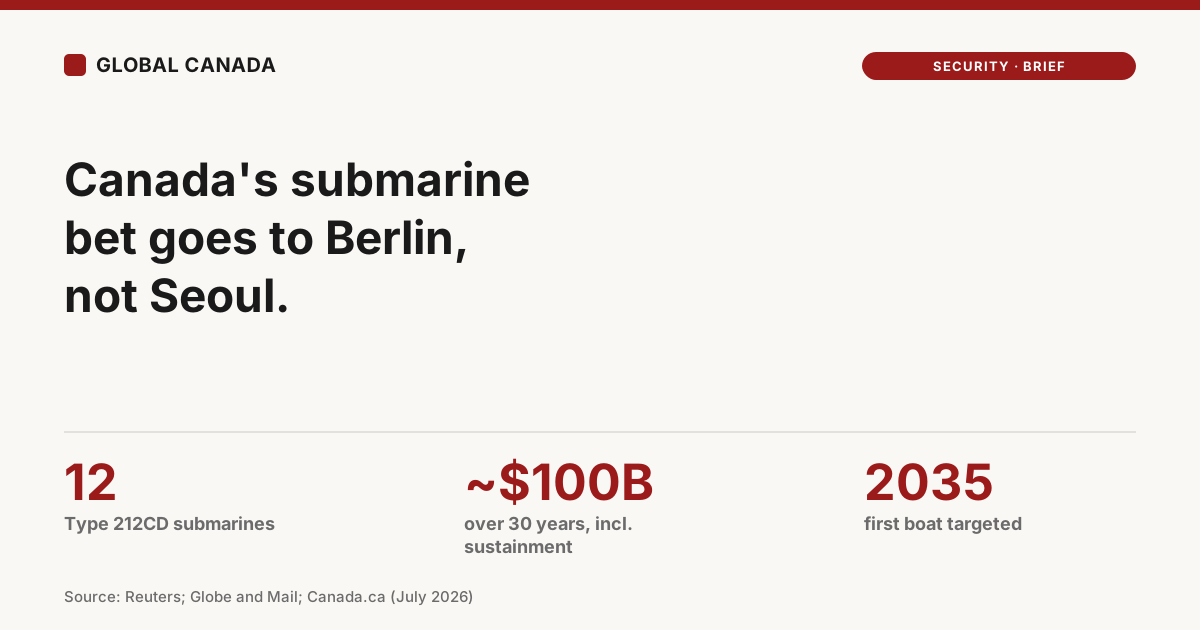
Canada has selected Germany’s Thyssenkrupp Marine Systems as the preferred supplier for its next submarine fleet and has opened negotiations for up to 12 boats. South Korea’s Hanwha Ocean remains the reserve supplier if negotiations with TKMS do not produce a contract. Prime Minister Mark Carney announced the decision in Halifax on July 6, before leaving for the NATO summit. The government describes the project as the largest military procurement in Canadian history, involving tens of billions of dollars.
The proposed boats are the Type 212CD, the same class Germany and Norway are jointly acquiring. They would replace Canada’s four aging Victoria-class submarines, bought secondhand from Britain and due to retire in the mid-2030s. Ottawa has said it aims to conclude a contract by the end of 2027 and receive the first submarine by 2034. The location and extent of Canadian production remain matters for negotiation; the government has emphasized domestic maintenance, infrastructure and industrial benefits rather than confirmed that later boats will be built in Canada.
Why It Matters
Three things are riding on this, and they pull in different directions.
The first is the Arctic. Quiet, long-endurance submarines able to operate under ice are among the few platforms that let a country actually see (and contest) what moves beneath its northern waters, and Canada’s ambitions in the North have outrun its ability to patrol them for years. Submarines that can loiter, listen, and surface through ice are a direct answer to that gap, and to a strategic environment in which Russia and China increasingly treat the Arctic as a domain to be watched.
The second is NATO. Choosing the 212CD buys Canada into a design already shared by two allied navies, which means common parts, common training, and interoperability that a one-off national design would never provide. Ottawa framed the choice around exactly this: NATO alignment, technology transfer, and deeper defence-industrial ties with Europe. Announcing it on the way to the NATO summit (where members are under pressure to convert spending pledges into concrete plans) is not an accident of timing.
The third is procurement politics. Canada’s major defence purchases have frequently faced delays and cost increases. The test will be whether negotiations produce a viable contract, whether the boats arrive close to schedule and whether the promised industrial benefits materialize as Canadian jobs and capability.
The road not taken, and what it signals about the pivot to Asia
The most interesting part of the decision is the bid Canada rejected. Hanwha Ocean’s loss is South Korea’s, and it lands awkwardly against Canada’s own stated ambition to diversify away from its overwhelming economic dependence on the United States and build deeper ties across the Indo-Pacific. Korea offered not just submarines but the prospect of a defence-industrial partnership with a major Asian democracy, the kind of concrete, big-ticket linkage the Indo-Pacific Strategy has struggled to produce. Choosing Germany reinforces the Euro-Atlantic axis Canada already sits on.
It would be too neat, though, to read this as Canada turning its back on Asia. Buying European submarines is itself a form of diversification away from reliance on U.S. suppliers for a critical capability. Technology transfer and Canadian industrial participation, if secured in the final contract, could seed domestic expertise. Nor does selecting TKMS as the preferred supplier preclude Canada from deepening commercial and technological ties with Seoul elsewhere. The evidence points toward an alliance-first choice on a highly sensitive procurement, while the broader Asia relationship continues on other files.
Whether that separation holds is the open question. Big defence buys shape relationships for decades, and which way Ottawa leaned when it mattered most won’t go unnoticed in Seoul.
What to Watch
- Whether Ottawa concludes contracting with TKMS by its end-2027 deadline, or the timeline begins to slip in the familiar way.
- What domestic work, technology transfer and long-term maintenance commitments appear in a final contract.
- Whether Hanwha’s defeat cools the broader warming in Canada–South Korea economic and security ties, or is quietly compartmentalized from it.