A government reveals its foreign policy in who it lets in as much as in what it says. Canada’s resettlement lists, drawn crisis by crisis, are a quiet map of the emergencies it has decided to own, and the map is being redrawn on a smaller scale.
Consider the recent choices. In February 2025 Canada committed to resettle 4,000 Sudanese as government-assisted refugees by the end of 2026, with 700 more through private sponsorship, a modest response to one of the world’s largest displacement crises. For Gaza, Ottawa opened a family-linked pathway capped at 5,000 applications; intake hit the cap and closed in March 2025. For Afghanistan, Canada met its pledge to resettle 40,000 people, then wound the program down, trimming $19.5 million in funding now that the commitment was fulfilled. The Ukraine emergency-travel scheme, which brought hundreds of thousands under temporary status, stopped taking new applicants in 2023, with the last renewals running to March 2026.
The numbers behind the signal
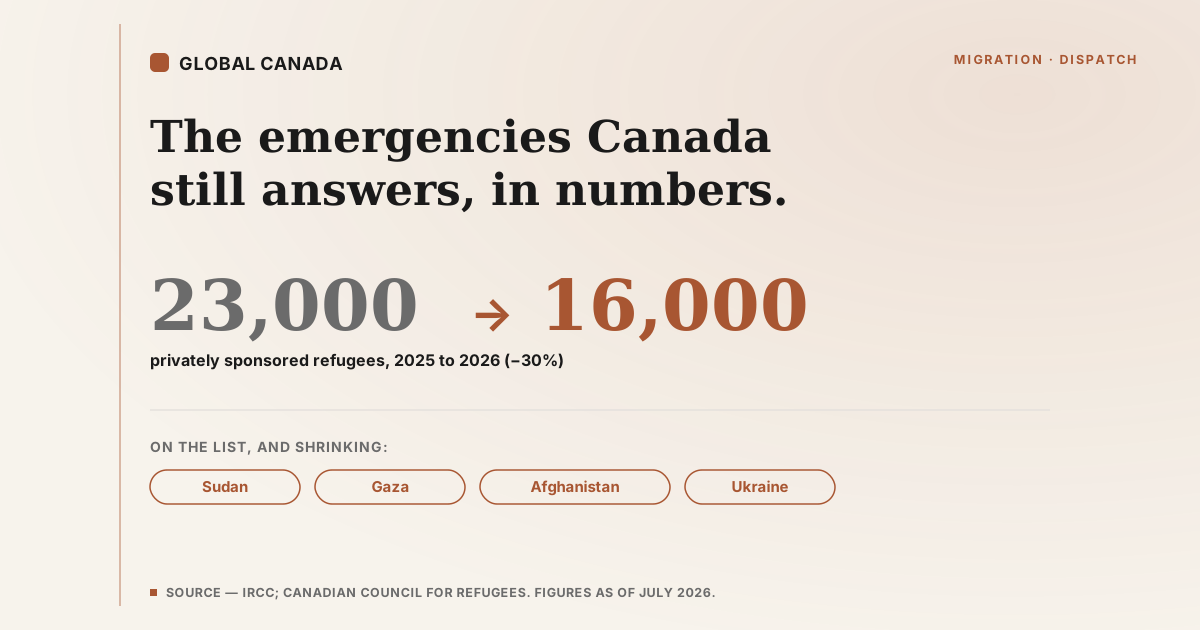
Each of those decisions is a sentence in a larger statement, and the overall figure is falling. The 2026–2028 Immigration Levels Plan cuts privately sponsored refugee admissions from 23,000 in 2025 to 16,000 in 2026, a 30 per cent reduction, and government-assisted refugees from 15,250 to 13,250. Resettlement is being pulled down inside a broader immigration retreat driven by housing and affordability politics at home.
The consequence is a narrowing of the crises Canada visibly answers. Resettlement has always been selective, no country takes everyone, but the selection is the policy. A cap of 5,000 on Gaza, set against the scale of that displacement, is a statement about how much exposure Ottawa wanted. A fulfilled-and-closed Afghan program is a statement that the file is considered done. A shrinking private-sponsorship number matters especially, because that channel runs on Canadian citizens, churches, mosques and community groups volunteering to carry the cost; cutting it tells willing sponsors the state will process fewer of the people they are ready to support.
The reputation at stake
Resettlement is one of the few areas where Canada has genuinely led. It was among the first countries to lean on private sponsorship, and in some years it resettled more refugees than any other state, a record ministers cite in every multilateral room. That standing is an asset in the same forums where Canada now asks for support on trade, security and a seat at the table.
Retreat is defensible; capacity is not infinite, and integration that fails helps no one. What a smaller programme cannot do is claim the old moral authority while quietly resettling fewer people. The countries watching Canada’s numbers, allies it lobbies and populations it once promised to shelter, can read a levels plan as clearly as a communiqué. The list of emergencies Canada answers is shorter this year, and the list is the message.
Sources
- Crisis-specific measures (Sudan 4,000 government-assisted plus 700 privately sponsored; Gaza family pathway capped at 5,000, closed March 2025; Afghanistan 40,000 resettled; Ukraine CUAET): Immigration, Refugees and Citizenship Canada
- Resettlement targets (privately sponsored 23,000 to 16,000; government-assisted 15,250 to 13,250): Canadian Council for Refugees
- 2026-2028 Immigration Levels Plan: Immigration, Refugees and Citizenship Canada
Figures as of July 2026.