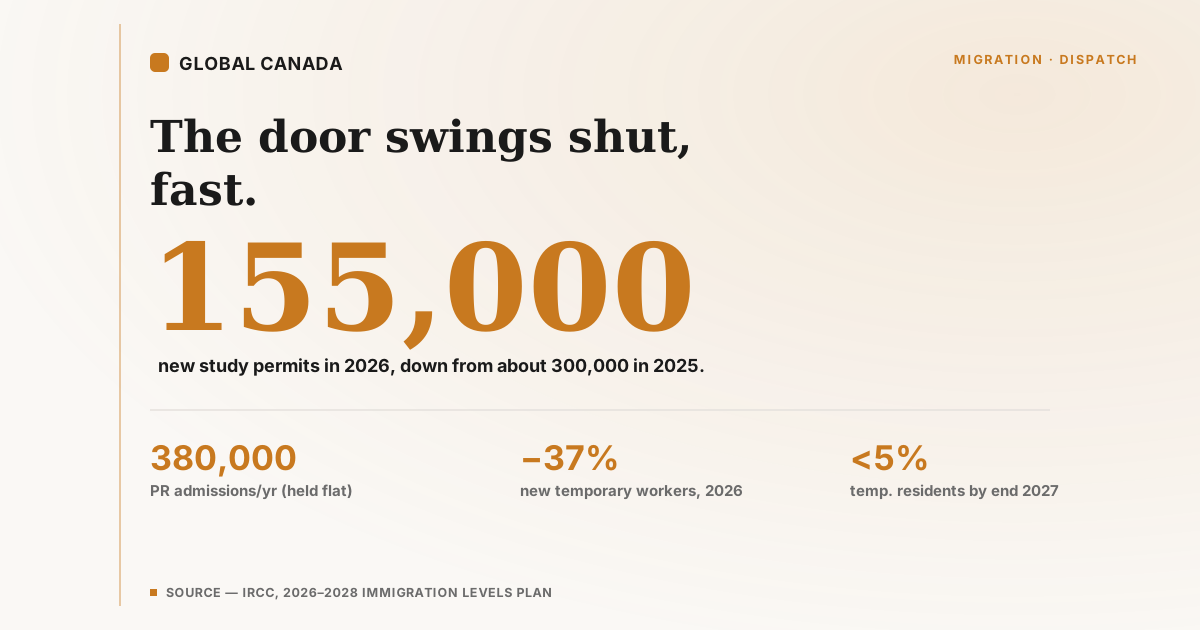
For a decade, the number only went up. Then Canada put it into reverse. The 2026–2028 Immigration Levels Plan holds permanent-resident admissions flat at 380,000 a year, down from a target that had been climbing toward half a million, and it does something no recent plan attempted: it sets out to shrink the temporary population outright, aiming to bring international students and temporary workers below 5 per cent of Canada’s population by the end of 2027.
The steepest cut lands on students. New study permits fall from roughly 300,000 in 2025 to 155,000 in 2026, and 150,000 in each of the two years after. New temporary-worker arrivals are capped at 230,000 in 2026, down about 37 per cent in a single year. A country that spent years marketing itself as the open alternative to a harder United States and a wavering Britain has become, almost overnight, a restrictive one.
Why the turn happened
The reversal was made at home, for domestic reasons. Rapid population growth collided with a housing shortage and strained health care, and immigration became the visible variable politicians could move. The Speech from the Throne committed the government to the sub-5-per-cent temporary-resident target explicitly, tying a foreign-facing policy to an internal affordability promise.
That is an honest account of the politics. It is also why the consequences will not stay domestic. When Canada issued permits, it was not only filling classrooms and care homes; it was running one of its largest instruments of foreign relations.
The bill that lands abroad
Start with the money. International education was, in effect, a major services export, with foreign students cross-subsidizing Canadian universities and colleges and sustaining whole college towns. Halving new permits pulls that revenue out of institutions from Cape Breton to the Fraser Valley, and pulls opportunity out of the sending countries, above all India, Nigeria and the Philippines, whose families had organized around a Canadian pathway.
Then the relationships. Immigration built Canada’s deepest ties to the Global South, ties measured in diaspora communities, remittances and goodwill. Tightening the taps strains exactly those connections at the moment Canada is trying to widen its economic map beyond the United States and toward the same regions its newcomers come from. There is a tension in courting India and Southeast Asia for trade while cutting the student and worker flows those partners value.
The retreat reaches the humanitarian channel too. Privately sponsored refugee admissions drop from 23,000 in 2025 to 16,000 in 2026, and government-assisted refugees from 15,250 to 13,250, trimming the resettlement numbers that are among Canada’s most-cited contributions to the multilateral system.
What is being wagered
The government’s bet is that a pause restores public consent for immigration and buys time for housing to catch up, and that the door can be widened again later without lasting damage. The wager underneath it is that source countries, universities and prospective migrants will wait, and that Canada’s reputation as a welcoming destination is durable enough to survive a few years of no.
Reputations in migration are built over decades and spent quickly. Students choosing between Canada, Australia and a recovering Britain are making the decision now, for intakes Canada has just capped. Whether they come back when the door reopens is the part no levels plan can set.
Sources
- 2026-2028 Immigration Levels Plan (permanent residents held at 380,000/yr; new study permits 155,000; new work permits 230,000, down 37%; temporary residents below 5% of the population by end-2027; economic class 64% by 2027): Immigration, Refugees and Citizenship Canada
- New study permits down from roughly 305,900 in 2025: immigration.ca
- Refugee cuts (privately sponsored 23,000 to 16,000; government-assisted 15,250 to 13,250): Canadian Council for Refugees
Figures as of July 2026.